Haptic Rain
January 2025 – July 2025 Helsinki, Finland
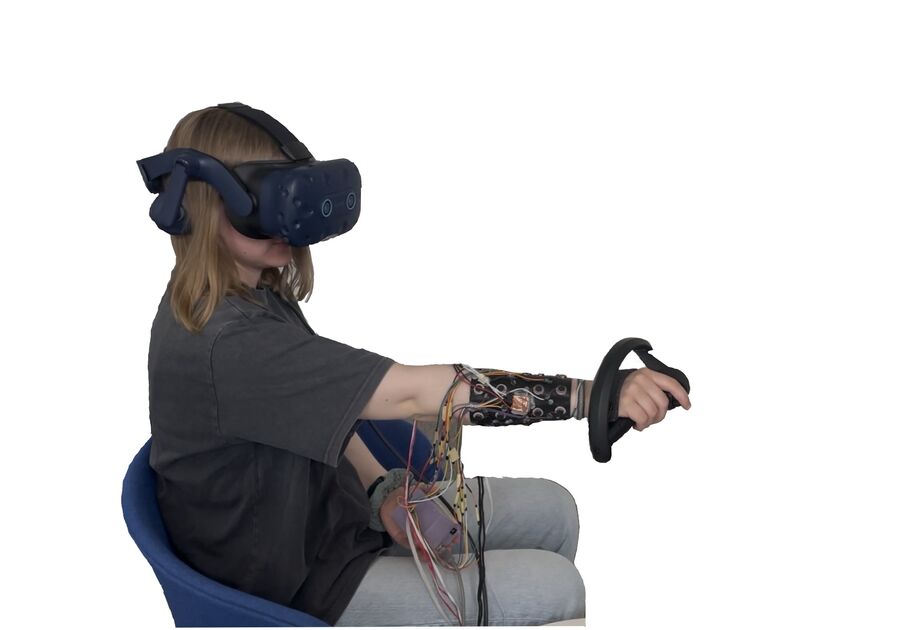
A master's thesis under the supervision of Prof. Yu Xiao exploring how to evoke the sensation of rain on human skin through a wearable haptic sleeve, integrated with a custom virtual reality environment.
VR has traditionally excelled at visual and auditory immersion. Simulating the tactile sensation of liquid - particularly rain - remains an open challenge. This work approaches it through first-person rain observation, a technical survey of actuator technologies, prototype development, and a user study.
The Sleeve
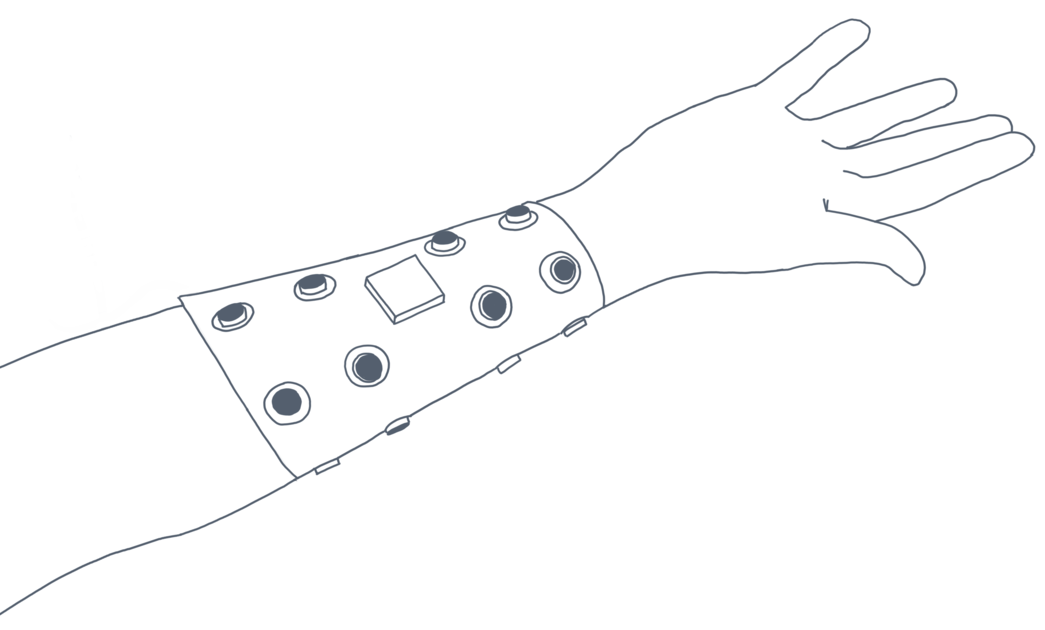
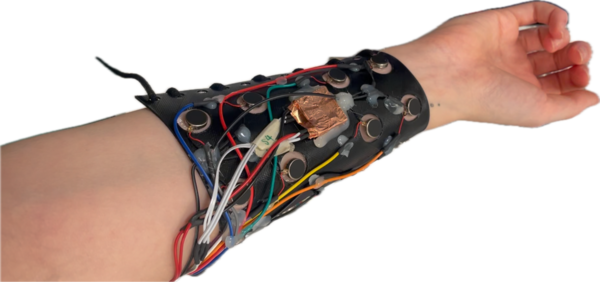
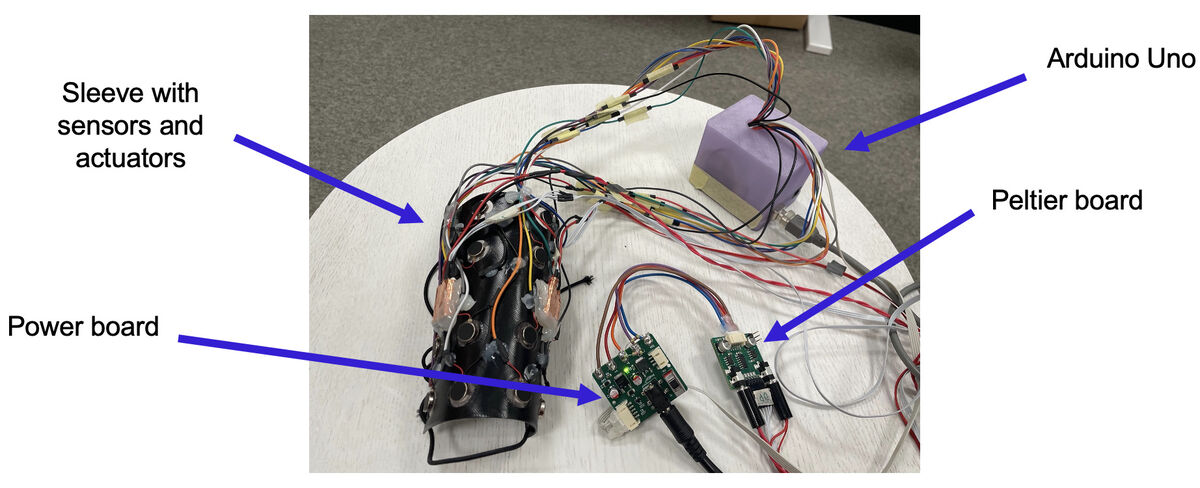
The prototype is a 3D-printed TPU sleeve worn on the forearm, housing 16 LRA vibration motors and 2 thermoelectric (Peltier) modules for cooling, all controlled by an Arduino Uno. The sleeve is divided into three zones that activate based on forearm orientation — so whichever side of forearm faces the sky receives the rain.
Two earlier actuator technologies were evaluated and ruled out: electrotactile stimulation (inconsistent across users, caused discomfort) and solenoids (too bulky and loud). Vibration motors combined with thermal cooling emerged as the most practical and comfortable option.
The VR Environment
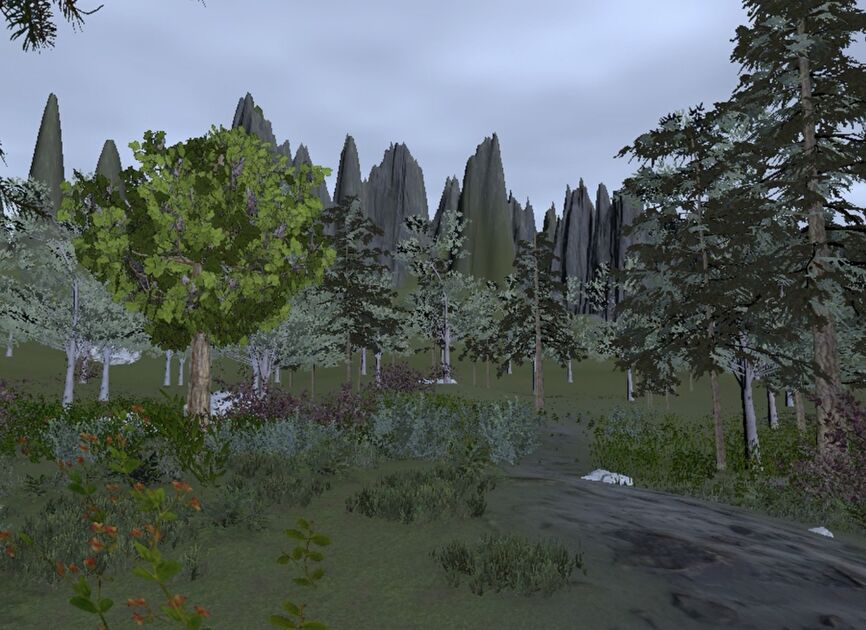
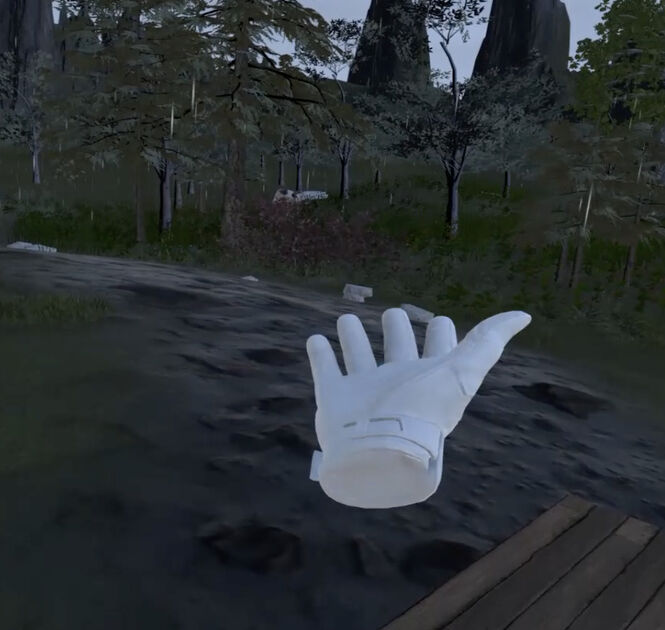
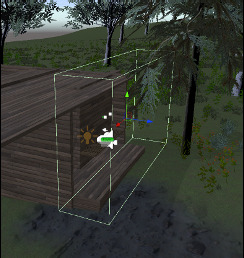
A custom scene was built in Unity: the user sits on the porch of a forest cabin, the sky gradually darkens, and rain begins to fall. Extending the hand into the rain activates the sleeve — both the vibration pattern and the cooling. Pulling it back stops the stimulation. Sound, visuals, and haptics were tightly coupled to create a coherent experience.
User Study Results
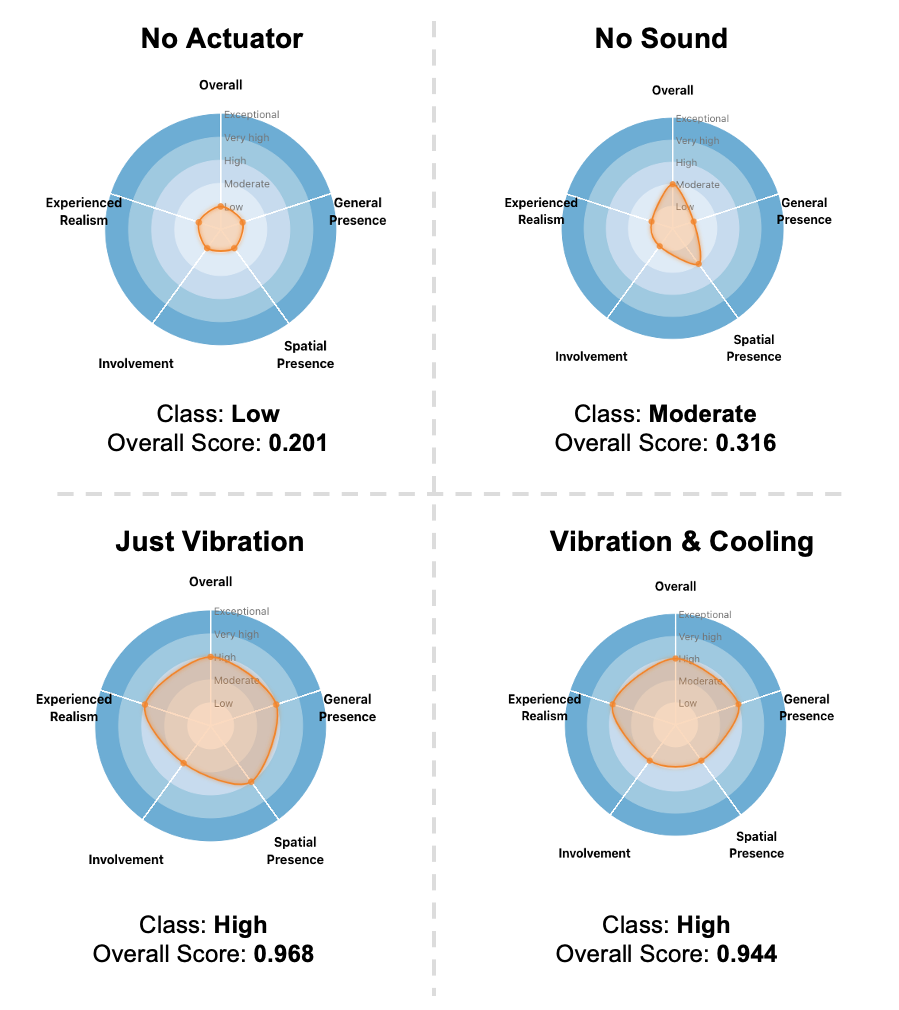
13 participants experienced four VR scenarios in randomized order, differing in whether the sleeve and/or sound were active. Results were evaluated using three questionnaires: the standardized Igroup Presence Questionnaire (IPQ), the Haptic Experience Inventory (HXI), and a custom Wetness and Tactile Sensation Questionnaire.
- Above-average presence score compared to 198 published VR studies
- High involvement (5.9 / 7) and enjoyment (5.8 / 7) scores
- Rain pattern and tactile stimuli rated as consistent with real-world experience
- All participants preferred the sleeve over no haptic feedback
- Main limitation: Peltier cooling degraded quickly without heat sinks — wetness perception was mixed